
The most expensive feedback in entertainment is the feedback you get from a network executive after twelve months of work. The cheapest is the feedback you get from a million AI agents in twelve minutes. MiroFish is the second one.
01The problem
Pitching is a confidence game played without information. A creator writes a treatment, a deck, a sizzle reel, and then waits for a development executive's gut reaction. The feedback loop is months long, the sample size is one, and the bias is enormous. Half the notes you get are about the executive's last meeting, not your show.
Real test screenings exist for finished products, not pitches. By the time you can afford to screen, you've already spent the money. We wanted a test screening for the idea.
02The approach
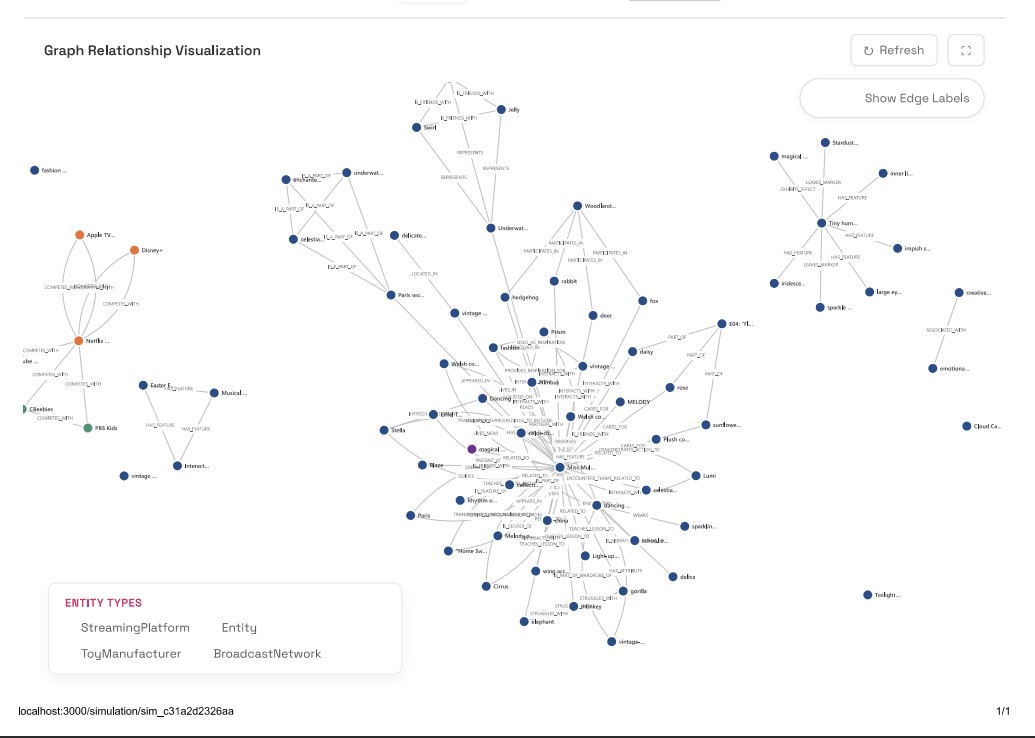
MiroFish constructs a synthetic audience as a population of agents. Each agent has a profile (age band, region, taste graph, viewing history, current mood) sampled from real audience research distributions. The pitch (a logline, a deck, an animatic, a one-pager) is shown to the population in parallel and each agent reacts in character.
The output isn't one verdict. It's a heat map. Which beats land for which demos. Where attention drops. Which character resonates with the 18-24 segment but reads flat to the 35+ band. Which line is quoted back unprompted (a strong signal) and which is forgotten (a weak one).
"It doesn't replace a real audience. It tells you which questions to ask one."
03Inside the control panel
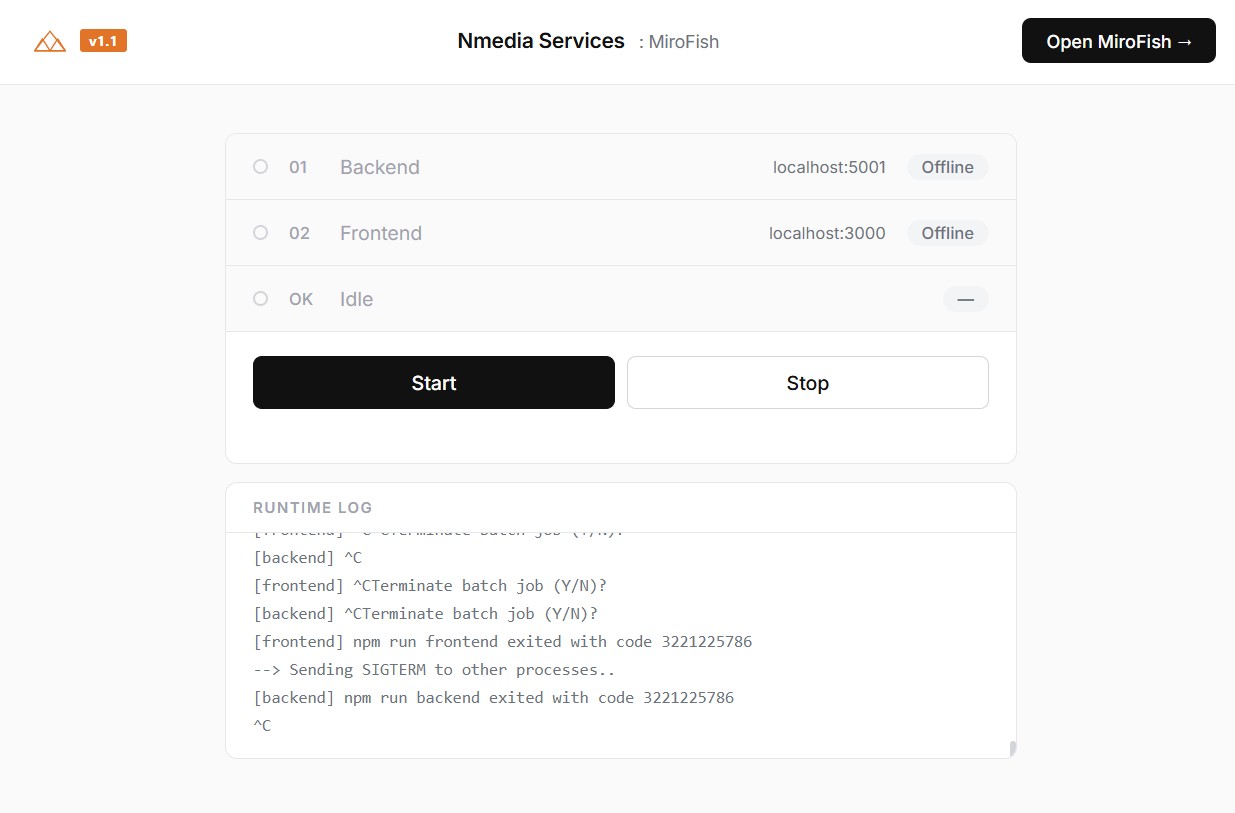
The dashboard is built for one job: showing a creator the parts of their pitch the audience didn't get.
- Panel composer. Pick a target audience by demo + taste + region. The panel size scales from a few hundred to a million agents. Accuracy vs cost trade-off in one slider.
- Sentiment timeline. If the input is a script or animatic, the dashboard plots second-by-second engagement and surprise across the panel.
- Quote extraction. Lines that agents repeat back are flagged automatically. Strong signal that a line is "sticky".
- Demographic diff. Compare reactions between any two segments. Find the show's natural audience instead of guessing it.
04What's next
MiroFish is becoming a feedback loop, not a one-shot tool. Future versions retain the panel between drafts so a creator can see whether revision two actually moves the dial. The next big push: longitudinal panels. Agents whose reactions evolve over a full season's worth of episodes. Test the show, not just the pitch.